
Key Takeaways
- First-time givers need a frictionless entry point, and a labeled envelope removes all guesswork
- Only 28% of new donors give a second time. A simple system can change that
- Stock “My Offering” envelopes work as a no-commitment starting point for any visitor
- The donor info field on the back turns a one-time gift into a trackable relationship
- A 4-step intake process creates consistent giving records from day one
- Pair envelopes with a stewardship follow-up plan to convert first-timers into regulars
Most first-time givers drop something in the plate and disappear. You never know who they are. You never get a second chance. A small system fix changes everything.
Why Do Most First-Time Givers Never Return?
Over 70% of donors give only once to any organization, and churches are no different. The problem usually isn’t the person. It’s the process.
When you hand a visitor a blank plate and no envelope, you create three friction points:
- No way for them to feel official or committed
- No record of who gave or how much
- No path for you to say thank you or follow up
Your first-time giver system doesn’t need to be digital or expensive. It needs to exist.
What Do You Need Before Sunday?
Set up your system before the service starts. You need four things:
- A stock of visitor offering envelopes — pre-printed, ready to use, no number required
- A dedicated collection point — a pew rack, welcome table, or usher basket
- A count team — two people to open and log envelopes after service
- A simple log sheet — date, amount, and donor info from the envelope back
Start with a box of 100 church offering envelopes. That’s enough for months of Sundays in most congregations.
How Do “My Offering” Envelopes Work as a First-Timer Gateway?
This is where the right envelope does real work for you. The My Offering envelope has a dual-sided design — clean and branded on the front, functional on the back.
The back asks for:
- Name
- Address
- Phone number
- Date of giving
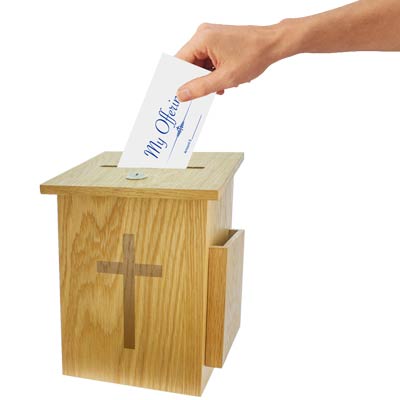
That back panel is your first donor record, not your last contact. A visitor who fills it out is telling you they’re open to a relationship. Treat it that way.
Place these envelopes in every pew rack before service. Make them visible. Let visitors reach for one naturally, no pressure, no announcement needed.
What Is the 4-Step First-Giver Follow-Up Process?
Once envelopes are collected, your system does the heavy lifting. Follow these steps every Sunday:
- Count and log same day — open envelopes with your count team, record amount, and donor details
- Send a thank-you within 48 hours — a handwritten note or personal email, not a newsletter
- Add to your giving records — even one gift earns a place in your tithing and giving tracker
- Invite them to the next step — a small group, a welcome lunch, or your next stewardship event
The 48-hour thank-you is the most skipped step and the most important one. It signals that your church notices and that their gift mattered.
Visitor Envelope vs. Numbered Member Envelope: Which Do You Use?
| Feature | Visitor “My Offering” Envelope | Numbered Member Envelope |
|---|---|---|
| Pre-assigned number | No | Yes |
| Donor info field | Yes (back panel) | Yes |
| Best for | First-timers, guests | Regular, recurring members |
| Reorder frequency | Monthly or as needed | Annually |
| Commitment level required | None | Member enrollment |
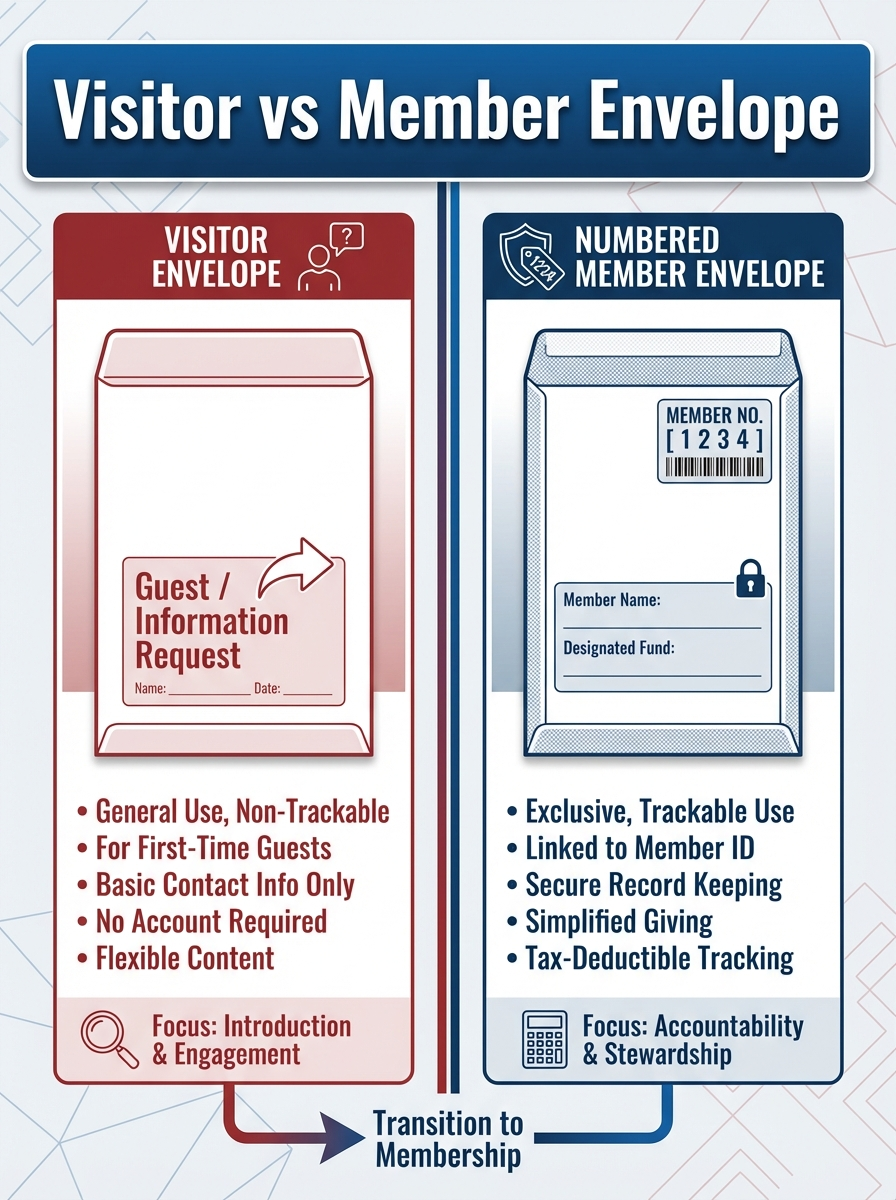
Start every new face with the visitor envelope. Move them to a numbered member envelope once they’ve given two or three times and expressed interest in regular giving. That transition is itself a milestone, acknowledge it.
Start With One Box and One Process
You don’t need software, a giving platform, or a committee. You need 100 envelopes, a two-person count team, and a follow-up habit.
Every first-time giver in your pew this Sunday is deciding whether your church is worth returning to. A simple envelope system tells them you’re organized, you care, and you’re paying attention.
That’s the message no sermon can deliver, but a thoughtful process can.

