
Key Takeaways
- A mustard seed pin gives a teen something small enough to keep for years.
- 66% of teens who grew up in church drop out between ages 18 and 22.
- Wearable faith reminders work: 44% of Catholics carry or wear a religious item monthly.
- Buy in bulk for the whole class so no student feels singled out.
- At under $3 a pin, a class of 30 costs less than one catered lunch.
- Pair the pin with a handwritten note naming what you see in that student.
- Skip gift cards. Teens spend those and forget who gave them.
- Present pins during the service, not after, so the moment sticks.
Confirmation day comes once. You want a gift the student still owns at 25, not one they lose by August. Here is what works.
Why Do Most Confirmation Gifts Get Forgotten?
Think about what teens usually receive. Gift cards. Cash in an envelope. A study Bible that stays on a shelf.
None of it is bad. It just does not travel with them.
The dropout numbers explain the stakes. Lifeway Research found that 66% of teenagers stop attending for at least a year once they hit 18.
Attendance drops fast. It sits at 69% at age 17, then falls to 40% by age 19.
Most of them do not storm out. Seventy-one percent said leaving was not an intentional decision.
They drift. And drifting is exactly what a small daily reminder pushes back against.
What Makes a Mustard Seed Pin Different?
The pin holds a real mustard seed under a clear dome. It is half an inch across and silver-plated.
That size is the whole point. A teen can pin it to a graduation cap, a backpack strap, a jacket lapel, or a lanyard.
It also arrives with a card explaining the Parable of the Mustard Seed. The student gets the object and the story together.
Here is the message a 15-year-old actually needs. Your faith does not have to be strong yet. It has to be real. That is the heart of Matthew 17:20.
That lands differently than a plaque. A plaque tells them they arrived. A seed tells them they started.
Our full mustard seed collection covers necklaces and keychains too, but the pin is the one they can wear on the day itself.
How Do You Choose Between Common Confirmation Gifts?
Cost matters when you are buying for a whole class. Durability matters more.
| Gift | Cost Per Student | Still Owned at 25? | Carries Daily |
|---|---|---|---|
| Gift card | $25 | No | No |
| Study Bible | $18 | Sometimes | No |
| Engraved plaque | $12 | On a shelf | No |
| Mustard seed pin | $2.69–$2.98 | Yes | Yes |
| Cross necklace | $9 | Yes | Yes |
The pin wins on the math. Bulk pricing drops to $2.79 for 12 or more, and $2.69 at 48 units.
A confirmation class of 30 runs about $81. That leaves budget for certificates and refreshments.
Compare that to $750 in gift cards. Same class. Very different afterlife.
Should You Give Every Student the Same Gift?
Yes. Uniformity protects the students whose families cannot match what others bring.
A confirmation class is a mixed room. Some kids arrive with grandparents and a party planned. Some arrive alone.
When every student receives the identical pin from the church, nobody counts what they got.
Buy from a single confirmation gift order so the finish and packaging match across the class.
If you want to personalize, do it in the note, not the object.
How Do You Present the Pin So It Actually Means Something?
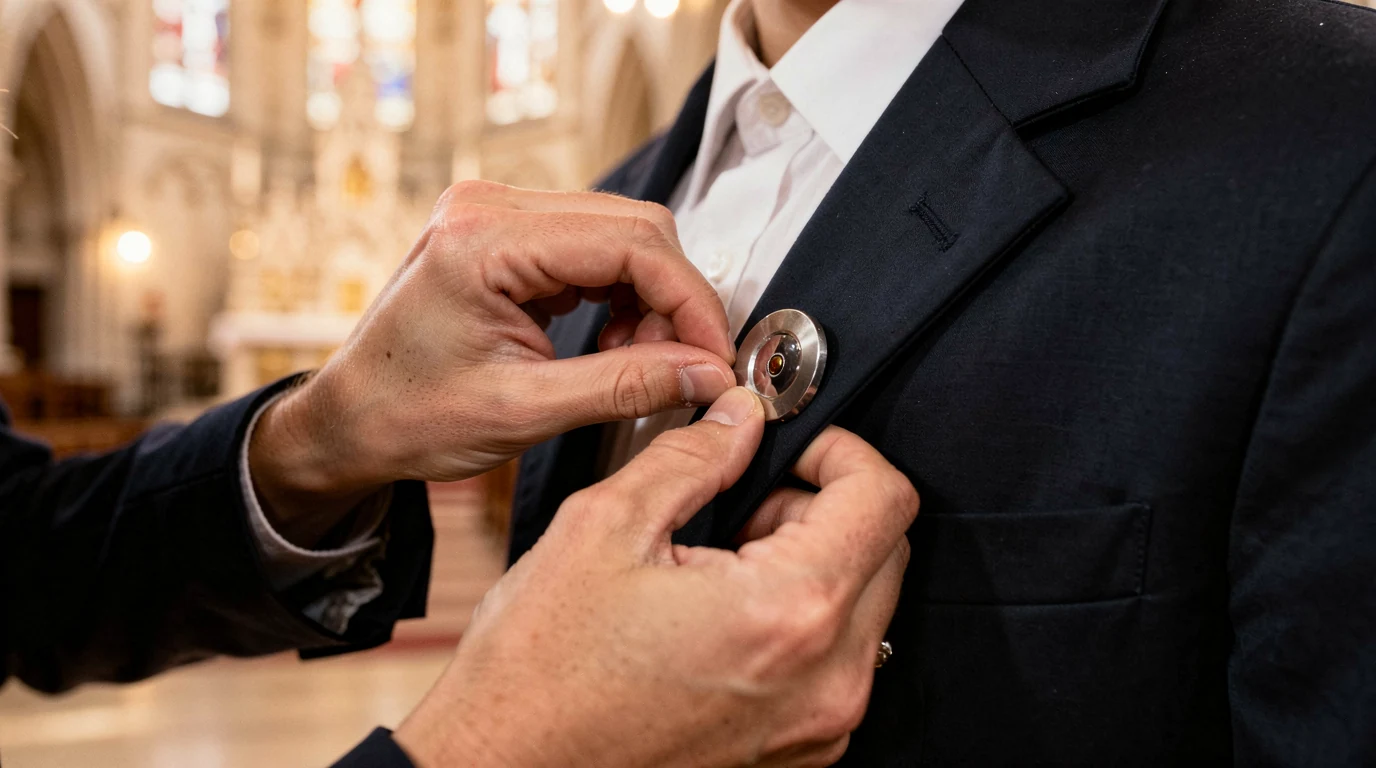
The handoff matters as much as the gift. Do it inside the service.
Try this sequence:
- Call each student forward by name
- Say one specific sentence about what you have seen in them
- Pin it on yourself rather than handing over a box
- Give the parable card with a handwritten note tucked inside
- Take a photo the family can keep
That third step changes everything. Being pinned by a leader in front of the congregation is a memory. Receiving a bag is a transaction.
Research from the University of Chicago found that people badly underestimate how much a written note lands. Writers worried about wording. Recipients just felt the warmth.
So write the note. Your sentences do not have to be polished.
Does a Small Faith Object Really Stick With Teens?
The habit data says yes. Pew Research found that 44% of U.S. Catholics wear or carry a religious item at least monthly, rising to 62% among weekly Mass attenders.
That is not decoration. It is a practice, repeated without anyone supervising.
Bible engagement is climbing too. Barna reported that weekly Bible reading among U.S. adults jumped from 30% to 42% in a single year, with Gen Z at 49%.
Teens are more open right now than the dropout numbers alone suggest. Give them an anchor while the door is open.
A pin in a dorm-room drawer still says something when they find it at 20. A spent gift card says nothing.
What Else Pairs Well With a Confirmation Pin?
Some churches build a small set instead of a single item. Keep it under $10 total.
- A ribbon bookmark for the Bible they receive
- A pocket coin with the verse the class studied
- A keychain they carry once they start driving
Pick two, not five. A tight set reads as intentional. A stuffed bag reads as swag.
If your parish wants the class year or church name added, custom pins and badges can be produced for larger orders.
Older students often respond to the same symbol in a different form. A mustard seed necklace works well for graduating seniors.
Conclusion
The best confirmation gift is small, wearable, and tied to a story the student can repeat.
A mustard seed says the right thing at exactly the right age. Start small. Keep going.
Shop the Silver Mustard Seed Pin for your confirmation class, with bulk pricing from $2.69.

